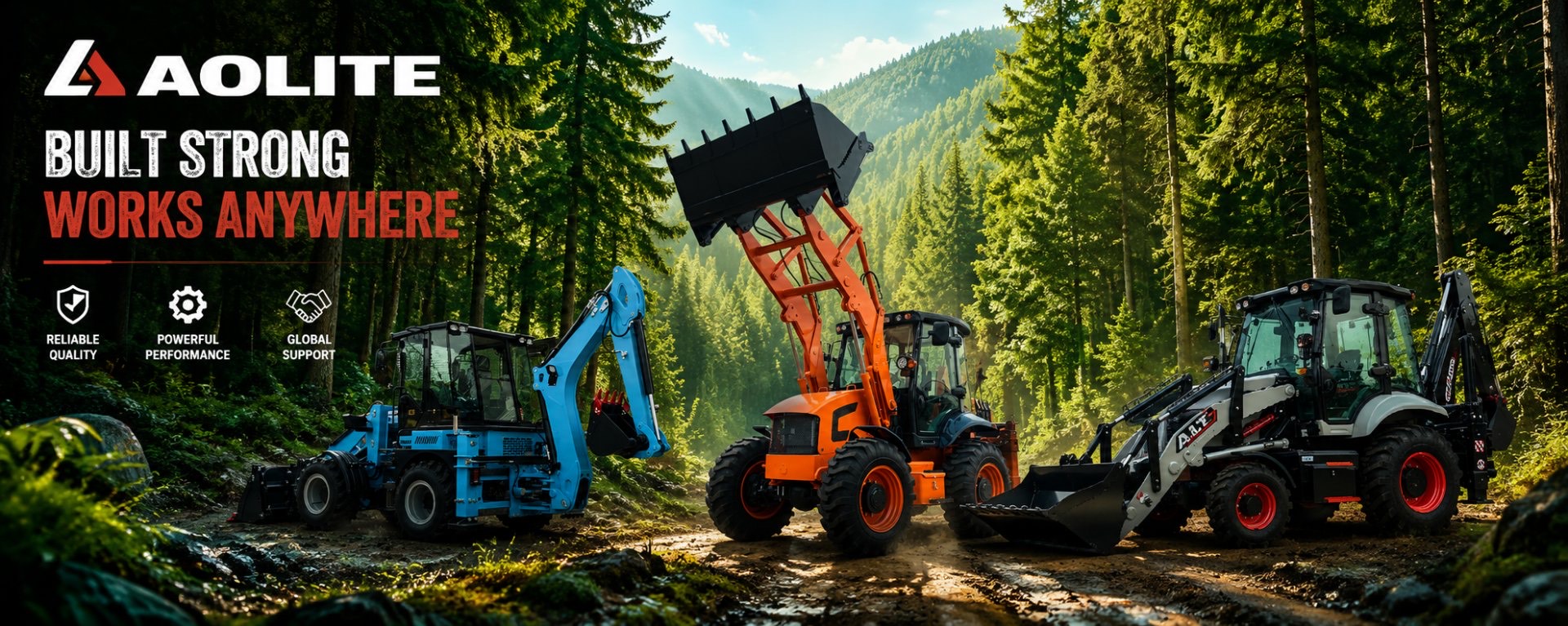
Three machines, one promise: built strong, works anywhere. That is easy to print on a banner and much harder to deliver in a market nobody has sold into yet. The rest of this article is about what has to be true behind the banner — and how to check that it actually is.
Who This Is Written For
Three kinds of people usually write to me about becoming a dealer, and the advice differs slightly for each.
- You already run a construction or rental business and you are tired of paying retail for machines you need anyway. You have the customers, the operators, and the site experience. What you do not have yet is the import and service side.
- You trade something adjacent — spare parts, trucks, generators, agricultural equipment — and your customers keep asking you for earthmoving machines. You understand trade and margins; what you lack is product depth.
- You are starting fresh with capital and confidence. This is the group I worry about most, not because ambition is bad, but because the market does not reward confidence. It rewards knowing who in your region buys machines and why.
All three groups make the same first mistake: they start with the machine instead of the market. They spend weeks comparing specifications and prices before they have spent a single afternoon counting who in their region actually buys backhoe loaders. So let us start there instead.
Step One — Prove the Demand Before You Look at Any Machine
You do not need a market study. You need a Saturday afternoon and a notebook, and then a few uncomfortable questions.
Count the machines. Drive your region and write down every backhoe loader you can see working — on road jobs, at a quarry, on a farm, in a municipal yard, parked behind a contractor's fence. Note the brand, roughly how old it looks, and whether it is running. That list is your real competition, and it tells you more than any brochure. If you cannot fill half a page within a day's driving, the market may be too thin for a dedicated dealership — that is worth knowing now rather than after your first container arrives.
Then ask who owns them and who fixes them. Three questions to the owners, in this order:
- Where did you buy it, and how long did you wait for it?
- When it breaks, how long does it stand before someone fixes it?
- If you needed a second machine next quarter, who would you call?
You are listening for two things. The first is pain: waiting months for a delivery, waiting weeks for a part, a technician who never comes. The second is repeat demand: owners who already bought once and would buy again, or contractors who rent machines because they cannot justify buying yet. If you hear consistent pain from a group of owners you can actually reach, you have a business. If you hear "everything is fine, my dealer is good," you are about to spend a lot of money learning that for yourself.
Step Two — Choose a Brand You Are Willing to Be Judged By
Here is a sentence I want you to take seriously: when you sell a machine, your customer is not judging the factory. He may never see the factory. He is judging you. Your name is on the relationship, and your reputation absorbs every delay, every warranty dispute, and every part that arrives late. That is why choosing a supplier is a bigger decision than choosing a model.
Most new dealers evaluate a factory on three things: price, specification, and how fast the salesperson replies. None of those will protect you in year two. The questions that actually predict whether a partnership survives are about the boring machinery of support: Is there a real spare parts process, with an order form, a price list, and a photo of the part before it ships? Can they train your technician? What exactly does the warranty cover, what does it exclude, and who decides? What is a realistic production lead time — not the best case, the realistic one? And when the market turns down and you miss a target, what happens?
I wrote a separate, longer piece on how to vet a backhoe loader dealer or supplier, including the background checks and the red flags worth taking seriously. The short version: a factory that answers these questions with a process is worth your time. A factory that answers with reassurance and enthusiasm only has told you something too.
One more thing on brand choice, from my side of the table. You do not need the largest factory, and you certainly do not need the cheapest. You need one whose volume, honesty, and product range match the customers you can actually reach. A dealer who represents a brand mismatch — a premium machine in a market that buys on price, or a basic machine sold into a market that needs wet brakes and heavy-duty options — will lose money for reasons that have nothing to do with effort.
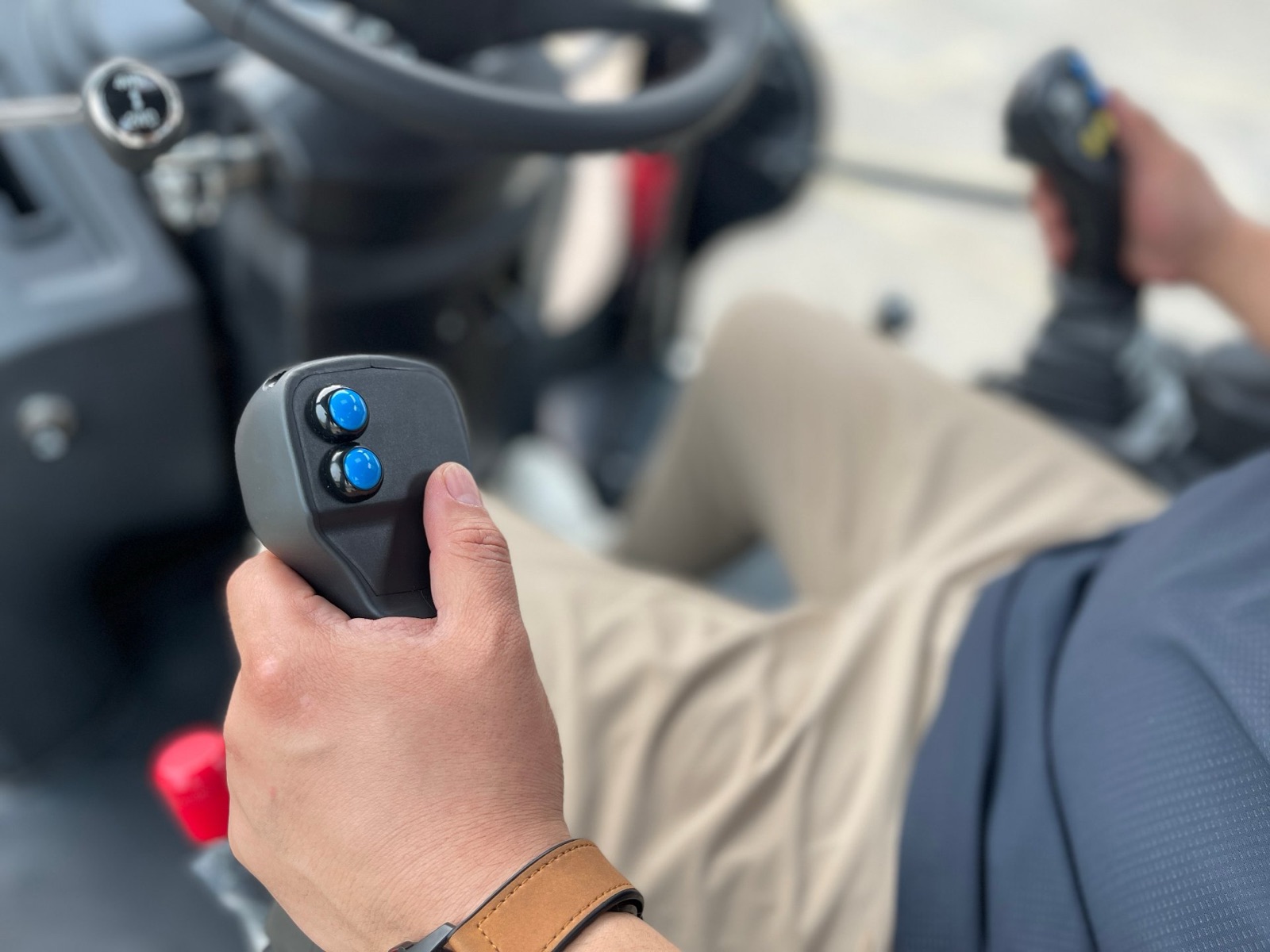
This is where the sale is actually decided — not in a brochure. Put your own hand on the levers before you commit to a brand, and ask who will be operating the machine and whether that person has used pilot controls before. He is the one who tells the next buyer whether it was a good machine.
Step Three — Go and Stand in the Factory
If you can travel, go and see the factory before you commit to anything. Not to be impressed — to verify. A camera and a video call can show you a lot, but standing on the line tells you things no photo can: whether the line is actually moving, whether the machines in build look like the machines in the brochure, whether the people answering your emails work in the same building as the product, and who does the final inspection.
If you cannot travel, ask for a live video walk-through — not a highlight reel. Ask them to show you the assembly line, the yard, the parts warehouse, and the machine you are being offered, in one continuous call. Ask them to show you a machine being tested. If a supplier cannot manage a live walk-through of the thing they are selling you, that is a data point, and it is worth more than a discount.
While you are there — physically or on video — collect the four things that make you self-sufficient later: the parts catalogue for your model, the service and maintenance schedule, the electrical and hydraulic diagrams, and a named person you can reach when something goes wrong. Dealers who leave the factory without these spend the next two years asking for them one emergency at a time.
Step Four — Your First Order Should Be Small, Deliberate, and Already Sold
The single biggest first-year mistake is ordering a container because the unit price is better, and selling "later." Machines are not inventory like bolts. They are expensive, they depreciate, and every unsold one holds working capital that you needed for the next five opportunities. A big first order does not make you a dealer. It makes you a warehouse with less cash.
What I would do instead: order one machine — or two if you already have named buyers. Then decide what that machine has to prove.
- It has to be demonstrable. Your first machine should be the one you can put in front of a customer: on a site, at a rental yard, at a municipality, at a farm. Buying a machine is a decision made after watching one work. Give your market that chance.
- It has to be specified to your region rather than to a price target. This is where a lot of new dealers hurt themselves, by cutting the wrong options to protect margin. Specify around three facts: which country the machine will be registered in (that decides the engine emission configuration), what ground conditions it will work in (dry and hard, or dust, sand and mud — that decides the axle braking setup), and how many attachments your customers will realistically run (three or more routinely means hydraulic quick coupler pays for itself; one or two occasionally means mechanical is the better answer). I have written the full reasoning in my configuration guide, and you can put any two of our models side by side on the spec comparison page before you ask for a quote.
- It has to survive an inspection. Have someone independent — your own technician, or a third-party inspector — check it on arrival against the specification, with photos and a written report. This is not distrust; it is the same standard you will be held to by your own customers.
Then let the machine sell. The fastest way to sell your second machine is a first machine doing real work in a place your customers can see it, with an owner who talks about it.
Step Five — Count the First Year Before You Sign Anything
This is the part people do in their heads and get wrong. Do it on paper, with your own numbers, before you commit. Nobody, including me, can hand you this arithmetic — duty rates, port charges, inland transport, cleaning, and local registration are country-specific and change. But the structure of the calculation is always the same.
| Cost line | What belongs in it |
|---|---|
| Landed cost | Unit price at the agreed terms + ocean freight + insurance + port and terminal charges at both ends + documentation + inland transport to your yard + unloading |
| Entry cost | Customs duty, taxes, and any registration, inspection, or conformity costs your country applies — get these in writing from a customs broker, not from a forum |
| Make-it-sellable cost | Pre-delivery inspection, fluids, decals or branding, any local adaptation your market expects, plus the storage cost per month if it does not sell immediately |
| Support cost | Your first parts stock, your technician's training, basic tooling and diagnostic equipment — the investment that lets you sell the second machine |
| Working capital cycle | How many months pass between paying the factory and receiving money from your customer. This is the number that ends dealerships, not margin |
Two habits turn that table into a business rather than a hope. First, always calculate a worse case than you expect: a longer shipping delay, a slower sale, a couple of warranty parts you have to supply. If the deal only works in the good case, it does not work. Second, keep the support budget sacred. New dealers cut parts stock and technician training first when cash gets tight, and that is precisely the moment support is generating the reputation that sells the next machine.
If you are still working out how the importing itself is done, my guide to importing machinery from China walks through the documents and the sequence of the shipment, which is where most first-time mistakes in this part of the calculation come from.
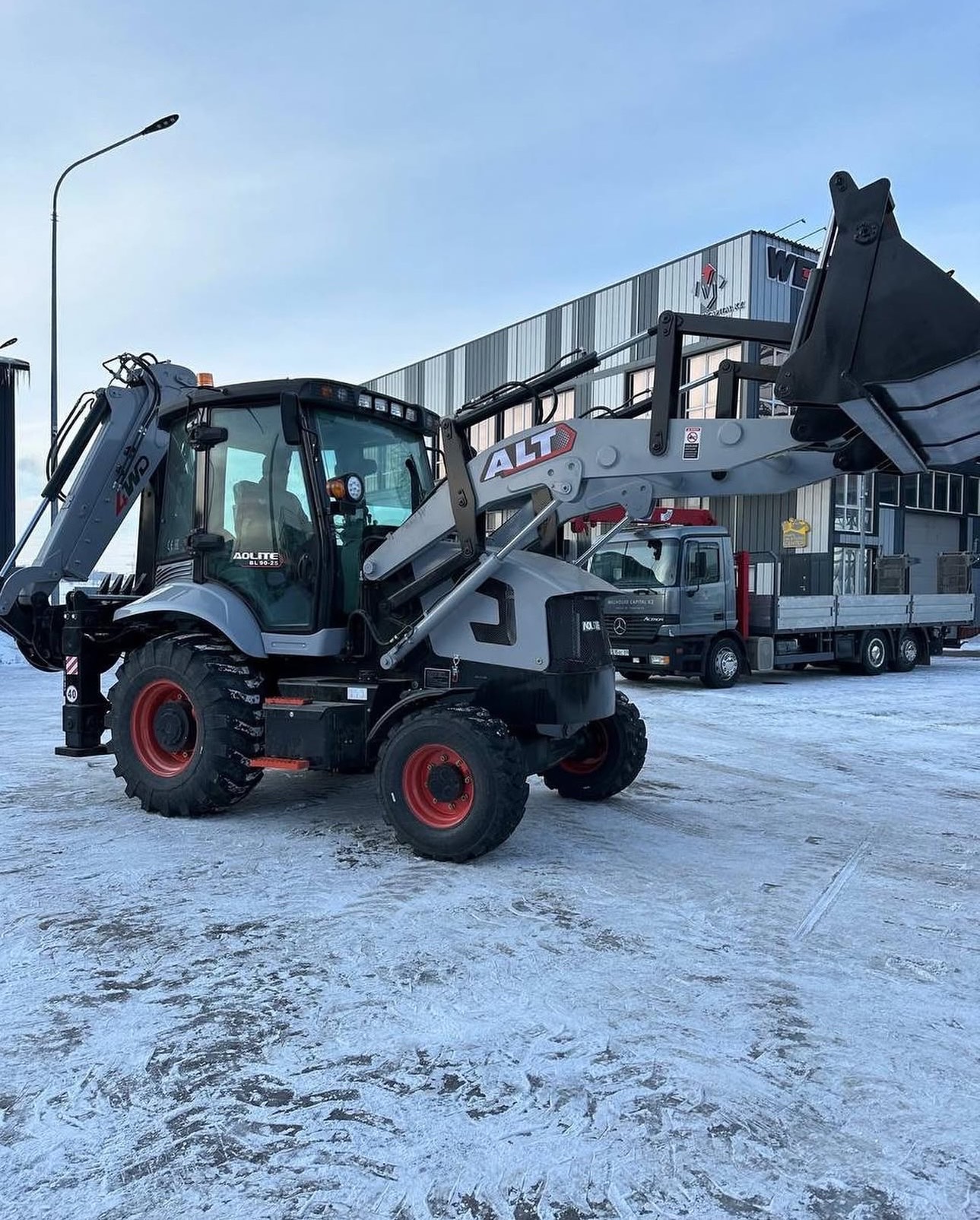
A machine that has already left the yard and gone to work in someone else's winter. That is the picture you are trying to reproduce — and the opposite of owning a yard full of unsold units. Which is why order size is a cash decision, not a price decision.
Step Six — Territory and Exclusivity: Know What You Are Paying For
Almost every new dealer asks for exclusivity in the first conversation, and almost every conversation goes better when they ask for something else first. Exclusivity is not a status symbol. It is a purchased commitment: normally the factory gives up the right to sell in your area, and in return you commit to a minimum volume or a first order of a certain size. That trade is only good for you if you can hold up your end in a bad year, not just a good one.
Three questions worth asking before you sign anything with an exclusive clause:
- What is the commitment, exactly? Annual quantity, minimum order size, or a target with a review date? Put it in writing, in units and dates, not adjectives.
- What happens if I miss it? Is there a grace period, a renegotiation, or does the territory simply open up? The answer to this question is the real value of the clause.
- What protection do I actually get? If another buyer in your city approaches the factory directly, what does the factory do? This is the only part of exclusivity that protects you, and it is worth more than the title.
A structure that works well for both sides: start without exclusivity, take two or three orders, prove the market with real numbers, and then negotiate from results. A factory that wants a large commitment before you have sold a single machine is asking you to fund its forecast. I would rather sign a dealer who has proven a market than one who has promised one — and I would rather tell you that now than have you find out the hard way.
Step Seven — Build the Service Side Before Anyone Needs It
This is the step that separates a dealership from a trading company, and it is the one most often postponed. A trading company sells a machine and moves on. A dealership stays in the relationship after the invoice — which is where all the future revenue is. Parts, filters, seals, hoses, bucket teeth, and service visits are the lines where you set the price, not the factory, and they are the reason a customer comes back to you instead of a stranger when his machine stops.
You do not need a warehouse or a fully equipped workshop on day one. You need three things: one person who genuinely understands the machine, a small stock of the parts that stop work when they fail, and a habit of answering the phone. My guide to backhoe loader parts and systems is a good starting point for the first of those, and the arithmetic of what to stock is in spare parts math — the principle being that the cheapest moment to ship a part is inside the container that is already coming.
The test I use for a dealer's service readiness is simple: when a customer calls on a Friday afternoon with a machine that has stopped, what is the honest answer? "I will have it running Monday" is a business. "Let me ask the factory" is a habit that costs you the customer, and it costs the factory nothing.
Step Eight — The First Twelve Months, Quarter by Quarter
Vague goals produce vague businesses. Here is a sequence that is ambitious but not fantasy, for someone starting with one to three machines.
| Quarter | What you should have at the end of it |
|---|---|
| Q1 | Your first machine working in the field, visible to your target customers. A written list of every machine you have seen working within your reach, with owner contacts. Your landed-cost calculation done with real invoices, not estimates. |
| Q2 | The first machine sold with support attached — a service visit, a filter kit, an operator briefing. Your technician trained, or booked for training. A parts shelf covering the failures that stop work. |
| Q3 | A second order placed from sold deals rather than hope. At least one referral or repeat conversation from your first customer. The first month where parts and service revenue covers your fixed costs. |
| Q4 | Twelve months of service records on the machines in your area. An honest review with your supplier: what sold, what did not, what parts you waited too long for. This is when you negotiate — targets, terms, territory — from evidence. |
Notice what is not on that list: a showroom, a big stock, and a large marketing budget. Those can come later and, for most of the dealers I work with, they come out of profits rather than before them.
What I Ask Before I Sign a Dealer
It would be a strange article if I described only your side of the decision. Here is the honest version of mine, so you know what you are walking into when you approach a factory — including mine.
I am not really looking for the biggest buyer. I am looking for someone who will still be selling machines in three years, because my business depends on that person ordering again rather than on the size of the first order. So I ask about your customers before I ask about your budget. I ask what you already sell, who you already know, and what your region's machines break on. I would rather hear "I have three contractors who have asked me for a machine this year" than "I can pay for six machines now," because the first one tells me there is a market and the second one only tells me there is money.
And I will tell you when I think a market is not ready for a dealership. I do this less often than you might expect, but it happens: a region where the machines in the market are all the same basic configuration and nobody has parts or service capability nearby, where a dealer would be selling a machine nobody can keep running. In that case the honest answer is to start as a buyer, learn the machine, and come back to the dealership conversation with experience. I would rather lose a container today than watch a new dealer fail in eighteen months and tell the market that our machines do not last.
I will also name the ways factories make this harder than it should be, because you should watch for them: chasing volume with incentives that push a dealer to over-order, treating small dealers as unimportant until they become someone else's dealer, letting a spare part sit in a warehouse for weeks when the machine is standing, and quoting a delivery date that the production schedule cannot actually hold. I try not to do these things, and you are welcome to test me on that. Ask for a real date and a real lead time. Ask for a photo of the part before it ships. Ask a question whose answer you can independently verify — and then verify it.
The Point of All This
Becoming a backhoe loader dealer is not complicated, but it is ordered. Market first, brand second, machine third — and the money and the service side planned before either. The dealers who fail in this business almost never fail because they chose the wrong machine. They fail because they bought a container before they knew who would buy from them, or because they treated support as something to add once they were successful, when it was in fact the thing that would have made them successful.
The good news is that most of this costs very little to get right: an afternoon counting machines, a few uncomfortable conversations with owners, a spreadsheet instead of a feeling, one trained technician, a small parts shelf, and the discipline to promise only what you can deliver. None of it requires a bigger first order or a better price. It requires treating the dealership as a business that has to still be standing in five years — which is exactly the standard your customers will hold you to anyway.
If you are weighing up whether to represent a brand in your market, send me a message. Tell me your region, what you sell today, and who you think will buy from you. I will give you a straight answer about whether we fit — and if the honest answer is "not yet," I will tell you that too, and what I would do first.
Thinking About Representing a Backhoe Loader Brand?
Tell me your market, what you already sell, and what your customers keep asking you for. I will tell you honestly whether our machines fit your territory — and if they do not yet, what to do first.
Talk to Vivian on WhatsApp