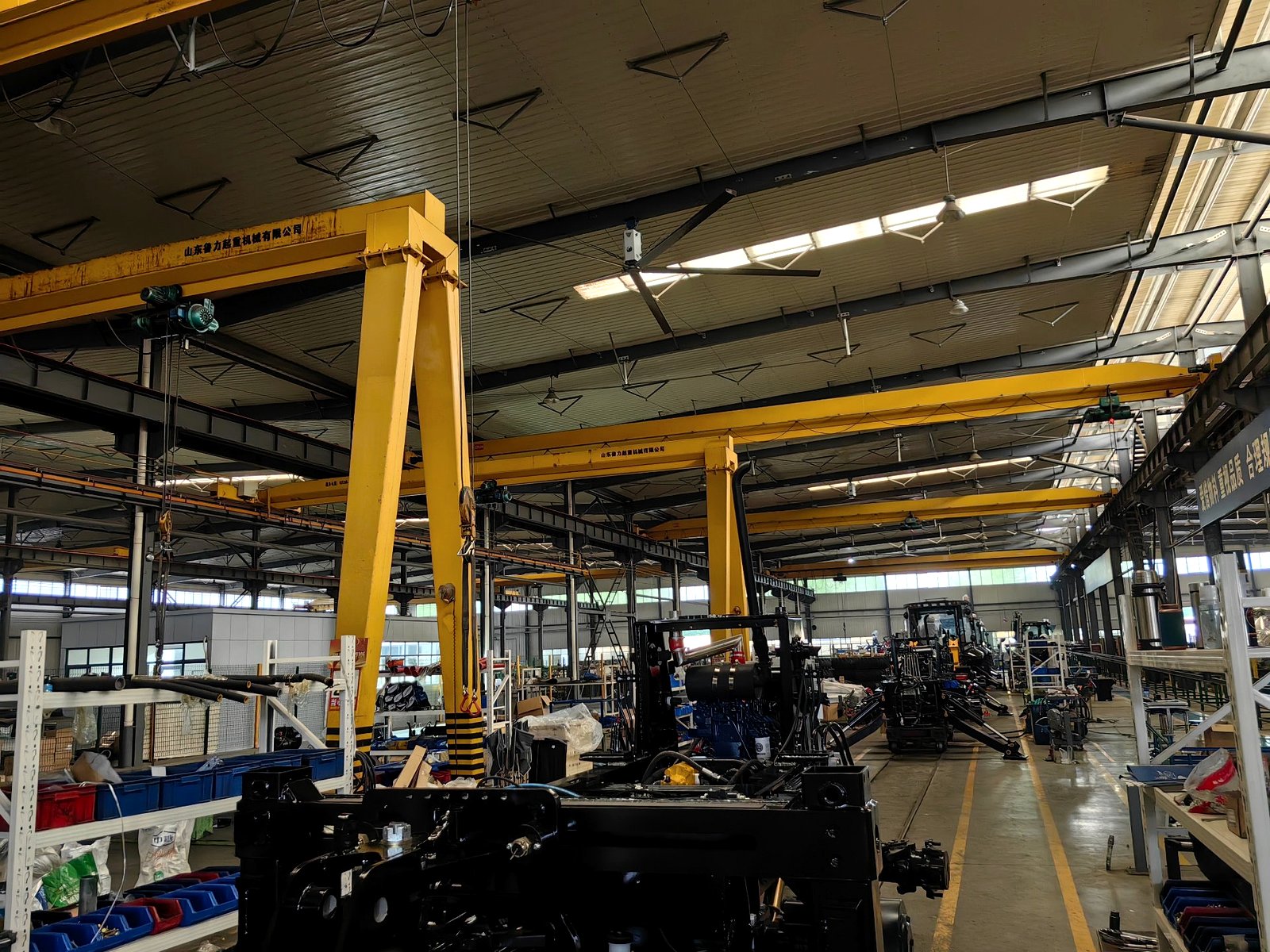
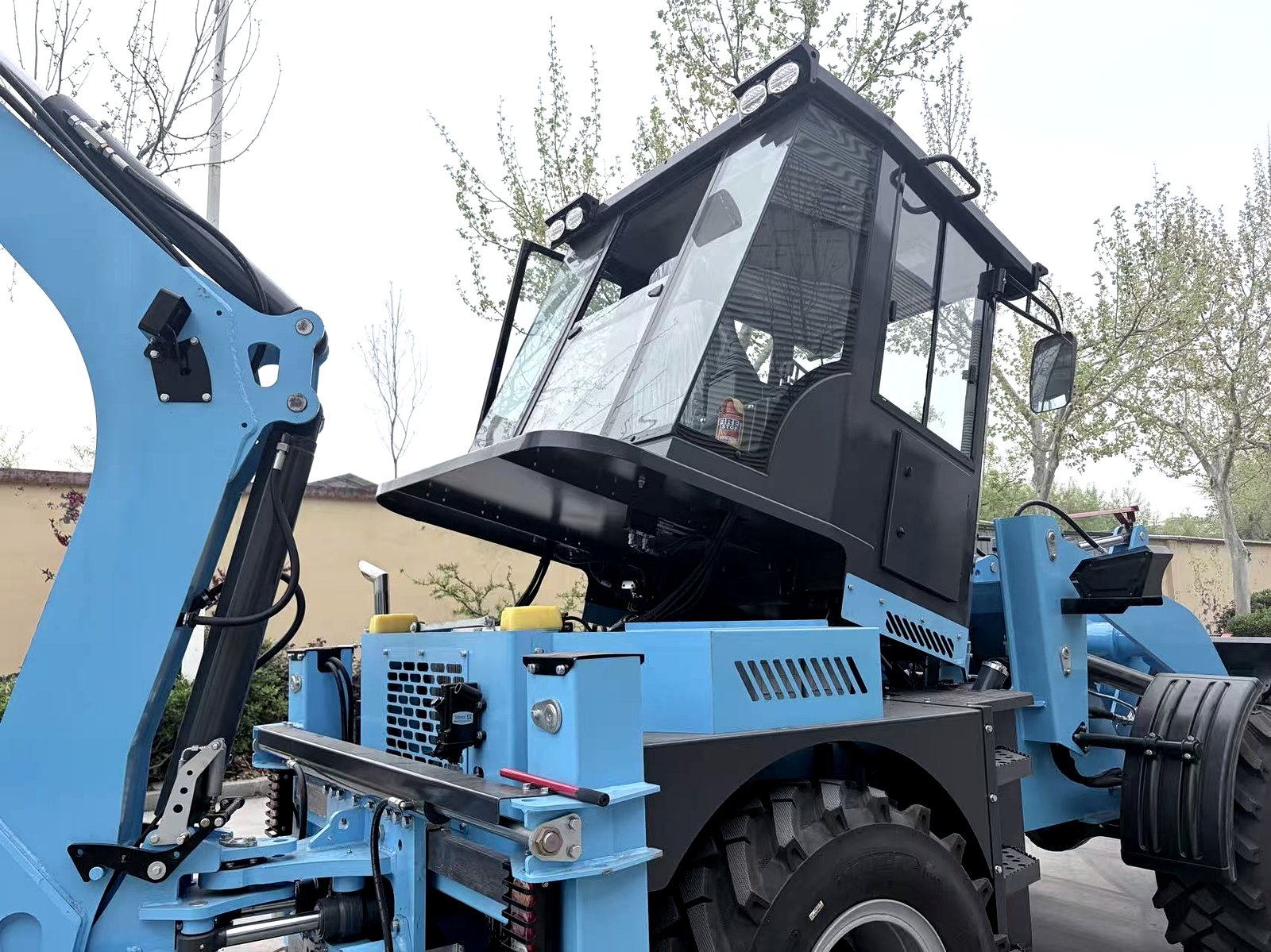
Whether you're taking delivery of a new machine or running a daily check, a proper inspection is your first line of defense against breakdowns, safety incidents, and costly repairs. I inspect every machine before it leaves my factory, and I teach my clients to do the same.
This is the exact checklist I use — adapted from years of factory-floor experience.
Pre-Delivery Inspection (PDI)
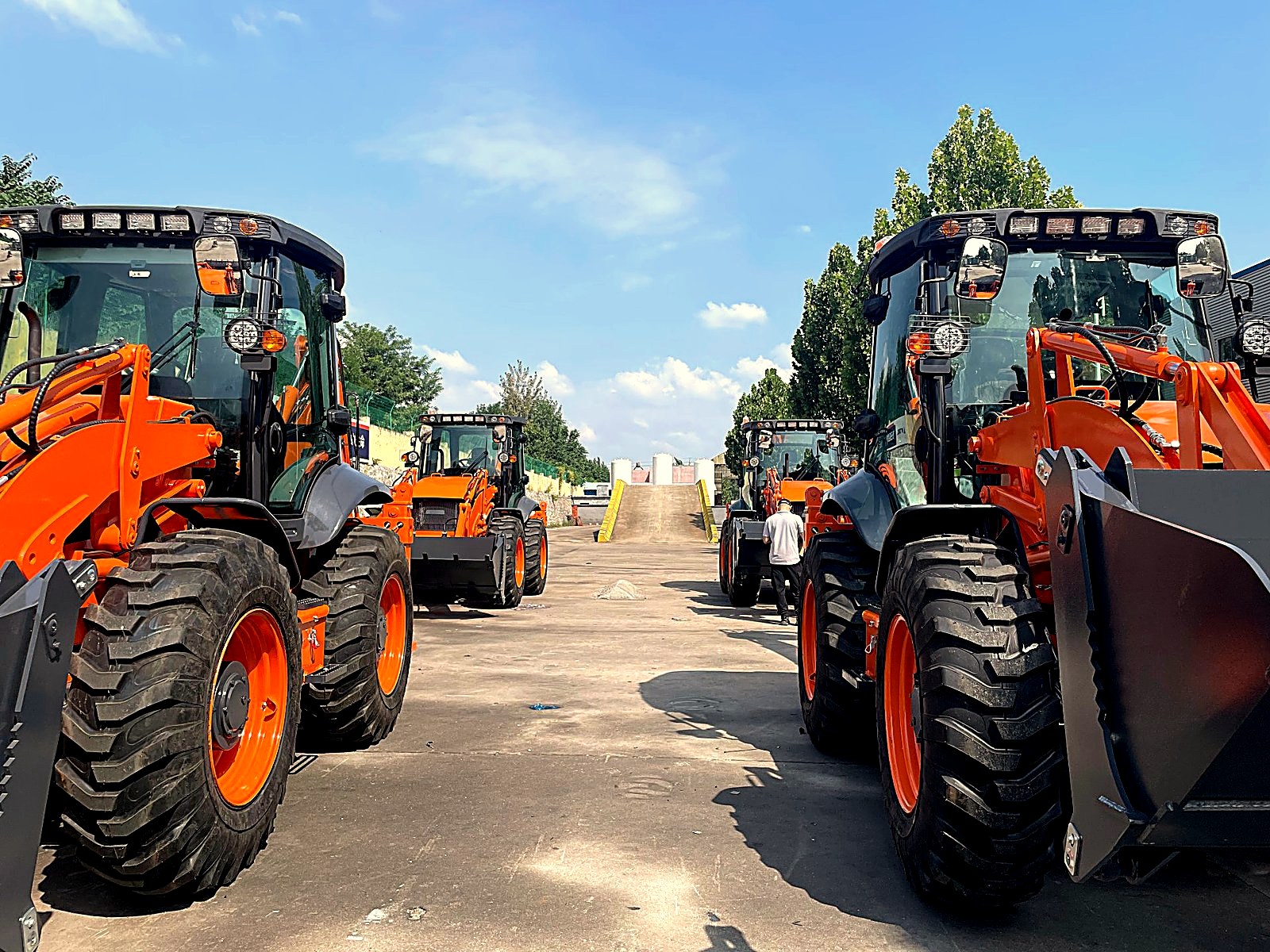
When your new backhoe loader arrives, don't just sign the delivery note. Do a full inspection first. Here's what to check:
1. Visual Walk-Around
- No visible damage to body panels, cab, or frame
- Paint finish consistent — no overspray or touch-ups hiding damage
- All decals and warning labels present and readable
- No signs of fluid leaks under the machine
- All guards and covers in place and secured
2. Engine Compartment
- Engine oil at correct level, clean (not dark or gritty)
- Coolant at proper level, correct color (green or pink, not rusty)
- Hydraulic fluid at full mark on the sight glass
- All belts properly tensioned, no cracks
- Air filter clean and properly seated
- Battery terminals clean and tight
- No loose wires or chafed insulation
3. Tires and Wheels
- All four tires same brand and correct size for the axle
- Tread pattern correct for the ordered specification
- Tire pressure matches the manual specification
- All wheel bolts torqued to spec (re-torque after first 50 hours)
- No cuts, bulges, or embedded objects
4. Hydraulic System Test
Start the engine and let it idle for 3 minutes. Then test each function:
| Function | Test | Pass Criteria |
|---|---|---|
| Loader raise | Raise empty bucket to full height | Smooth, no hesitation. Reaches full height in under 8 seconds. |
| Loader dump | Dump bucket from raised position | Smooth rollback. No jerking. |
| Backhoe boom | Raise and lower boom through full range | Smooth movement. No drift when held at mid-point for 30 seconds. |
| Backhoe stick | Curl and extend stick through full range | Smooth. Full extension and retraction. |
| Backhoe bucket | Curl and open bucket | Smooth. Full curl and full dump. |
| Swing function | Swing left and right through full arc | Smooth. Stops firmly at end of range. |
| Stabilizers | Deploy and retract both stabilizers | Smooth. Lock firmly in both positions. |
5. Road Test
- Steering tracks straight on level ground (no pulling)
- All gears engage smoothly (no grinding)
- Brakes stop the machine in a reasonable distance
- Parking brake holds on a slope
- Speedometer and hour meter functional
- No unusual noises from drivetrain, axles, or transmission
6. Documentation Check
- Operation manual
- Parts manual
- Maintenance schedule
- Engine manual
- Warranty certificate
- CE or equivalent certification
- Factory test report
- Tool kit and basic spare parts (filters, fuses, pins)
Don't sign the acceptance form until every item passes. Once you sign, the machine is yours — and problems become warranty claims instead of delivery issues. Warranty claims take time; delivery refusals get immediate attention.
Daily Inspection Checklist
Do this every morning before starting work. It takes 5-10 minutes:
Fluid Levels (Engine Off)
- Engine oil — pull dipstick, check level and color
- Coolant — check overflow tank (never open hot radiator cap)
- Hydraulic fluid — check sight glass or dipstick
- Fuel — check gauge, fill if below 1/4 tank
Visual Checks
- Walk around the machine — look for leaks, damage, loose parts
- Check tires — pressure, cuts, embedded objects
- Inspect hydraulic cylinders — chrome rods clean, no scoring
- Check bucket teeth — none missing or excessively worn
- Verify all pins and cotter pins are in place
Functional Checks (Engine Running)
- Horn works
- All lights work (headlights, taillights, hazard lights)
- Gauges read normal (oil pressure, temperature, fuel)
- No warning lights on the dashboard
- Brakes respond normally
- Steering feels normal (no excessive play or stiffness)
Weekly Inspection
In addition to the daily checks, do these once a week:
- Check battery water level (if not maintenance-free)
- Clean radiator fins with compressed air
- Check all hydraulic hoses for chafing and cracking
- Grease all grease points (see maintenance schedule)
- Check air filter — clean or replace if dirty
- Inspect alternator belt tension
- Check wheel bolt torque
- Test all safety switches and interlocks
Monthly Inspection
- Change engine oil and filter (or per schedule)
- Change hydraulic filter
- Check transmission fluid level and condition
- Inspect brake pads and discs
- Check axle oil levels
- Inspect all structural bolts on boom, dipper, and loader arms
- Check cab glass for cracks that could compromise ROPS/FOPS integrity
- Test battery condition with a load tester
Inspection Log
Keep a written log of every inspection. This helps you:
- Track recurring issues before they become failures
- Prove maintenance compliance for warranty claims
- Plan maintenance budgets and parts orders
- Demonstrate safety compliance to inspectors
A simple notebook works. Write the date, hours, what you checked, and any issues found. See my maintenance checklist for the full service schedule.
Want my factory inspection checklist as a PDF?
I can send you the same PDI form I use at the factory, adapted for daily and weekly use.
Ask me on WhatsApp