Tires are the single most overlooked component on a backhoe loader. Most owners think about tires only when one goes flat. But the right tires, properly maintained, can make your machine 30% more productive and last twice as long.
I've seen machines come back from job sites with tires shredded after three months, and I've seen the same model run five years on the original set. The difference isn't luck — it's knowing what to buy and how to maintain them.
Tire Types: What the Codes Mean
Backhoe loader tires are classified by tread pattern, each designed for specific ground conditions:
| Code | Pattern | Best For |
|---|---|---|
| L-2 | Standard traction | General construction, soft ground, mud |
| L-3 | Deep traction | Rock, gravel, quarry, abrasive surfaces |
| L-4 | Extra deep | Severe rock, mining, sharp debris |
| R-1 | Agricultural | Farming, soft soil, field work |
| R-4 | Industrial lug | Mixed construction and farm use |
Which Pattern Should You Choose?
It depends on where your machine spends most of its time:
- Construction sites with mixed ground: L-3 is the safest all-around choice
- Farming and agriculture: R-1 or R-4 for maximum soil traction
- Quarry or rock work: L-4 for cut and chip resistance
- Road work and urban sites: L-2 for smoother ride and less surface damage
If you're not sure, go with L-3. It handles 90% of job site conditions well and lasts longer than L-2 on rough ground.
Tire Size: Why It Matters
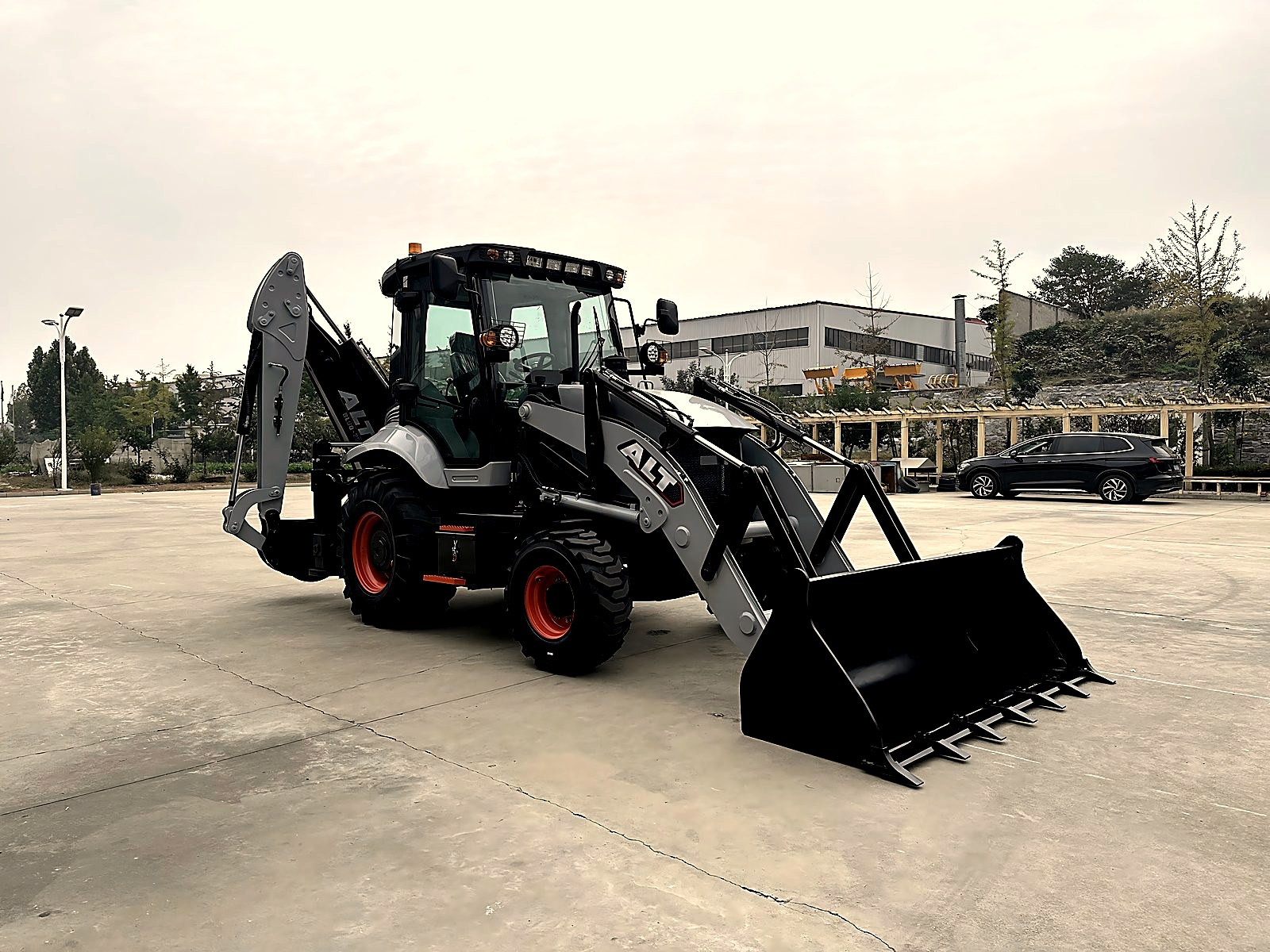
Backhoe loaders typically run different tire sizes front and rear:
- Front tires: Smaller, narrower — designed for steering and loader stability
- Rear tires: Larger, wider — designed for traction and digging stability
Never mix tire sizes or brands on the same axle. Different rolling diameters cause drivetrain stress and uneven wear. If you replace one tire on an axle, replace both.
Tire Maintenance: The 5-Point Check
Do this check every morning before starting work. It takes 3 minutes:
- Pressure: Check both front and rear with a gauge. Under-inflation causes excessive sidewall flex and heat buildup. Over-inflation reduces traction and causes center wear.
- Tread depth: Use a depth gauge. Minimum safe depth is 10mm. Below that, traction drops dramatically, especially in wet conditions.
- Cuts and damage: Look for cuts, bulges, exposed cords, and embedded objects. A small cut today becomes a blowout tomorrow.
- Bead seating: Make sure the tire bead is properly seated on the rim. A partially seated bead can slip under load.
- Lug nuts: Check that all wheel bolts are tight. Loose bolts cause wheel wobble and can shear off completely.
Tire Rotation: Extend Tire Life by 40%
Tires wear unevenly. The front tires wear on the outside edges (from steering), while rear tires wear in the center (from traction and digging loads). Rotating tires every 500 hours evens out the wear pattern and extends total tire life.
Rotation pattern: Swap front-left with rear-left, and front-right with rear-right. Don't cross sides — keep tires on the same side of the machine to maintain directional tread patterns.
When to Replace Tires
Replace tires when you see any of these signs:
- Tread depth below 10mm on any part of the tire
- Visible cords or fabric through the rubber
- Bulges or blisters on the sidewall
- Cuts deeper than 25mm into the tread
- Uneven wear indicating alignment or suspension problems
- Tires more than 5 years old (rubber degrades even without use)
Solid vs Pneumatic Tires
Some operators ask about solid (airless) tires. Here's the trade-off:
| Factor | Pneumatic (Air) | Solid |
|---|---|---|
| Ride comfort | Better (absorbs shocks) | Harsh (transmits all vibration) |
| Puncture risk | Yes | None |
| Cost | Lower | Higher |
| Weight | Lighter | Heavier (reduces payload) |
| Best for | Most job sites | Demolition, scrap yards, glass zones |
For 95% of my clients — construction, farming, utilities — pneumatic tires are the right choice. Solid tires make sense only if you work in environments where punctures happen daily.
Sourcing Replacement Tires
If you're buying a machine from me, I can source quality tires directly from the factory. The BL series comes with L-3 tires standard, which covers most working conditions. If you need a different pattern for your specific job site, tell me before delivery and I'll swap them at the factory.
For existing machines, always buy from a reputable tire dealer. Cheap tires from unknown brands may look identical but use inferior rubber compounds that wear out in months.
Need tires for your backhoe loader?
Tell me your machine model and working conditions. I'll recommend the right tire pattern and can source them for you.
Ask me on WhatsApp