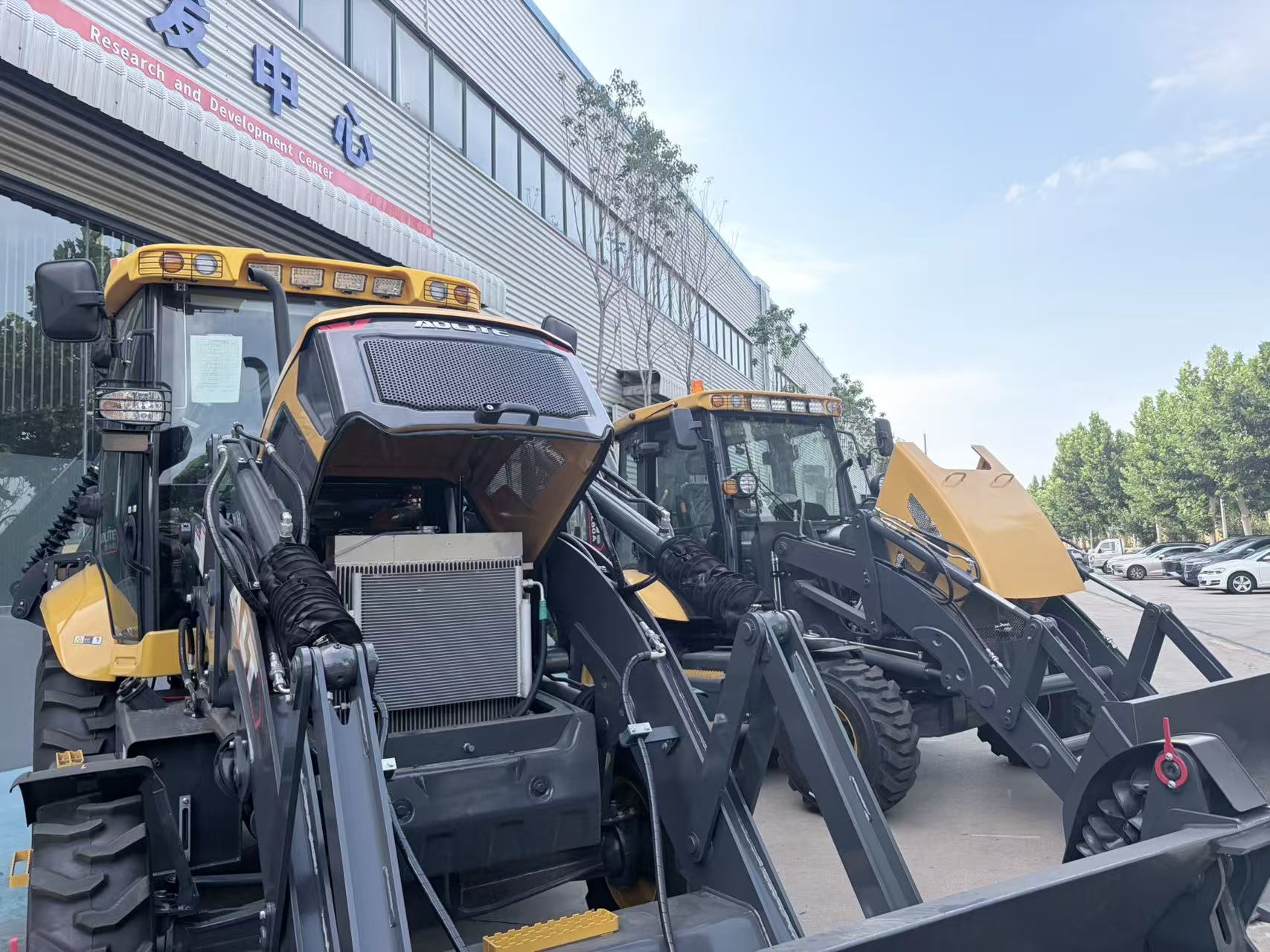
Machines at the R&D center — same platform, different configurations. The price moves with the spec sheet, not with guesswork.
Why the Quotes Look So Different
When I walk buyers through the workshop, the first thing I tell them is this: do not compare headline prices until you compare line-item specifications. Two machines with the same horsepower rating can sit thousands of dollars apart because of what is inside the frame.
Here is what actually moves the number:
- Engine brand and tier. A Tier 3 domestic engine and a Tier 4 imported engine are not the same cost item. Neither is wrong — but they are not interchangeable.
- Axle type. Wet disc brakes, four-wheel drive, and limited-slip differentials add material cost that shows up on the quote.
- Hydraulic valve brand. The difference between a generic monoblock and a name-brand sectional valve is real, and it affects both price and serviceability.
- Tire grade and size. Industrial, agricultural, and foam-filled tires each carry a different cost structure.
- Attachments and quick-coupler system. A 4-in-1 bucket with hydraulic grab is a different investment from a standard material bucket.
- Shipping terms and volume. FOB, CIF, and DAP shift who pays for what. A single unit and a container load do not share the same per-unit freight math.
- Payment structure. A 30/70 T/T split carries different risk pricing than a letter of credit.
When you line up the specs side by side, the price usually makes sense. The confusion comes from trying to compare two machines that were never meant to be identical.
The Market Is More Transparent Than It Looks
I am not going to pretend steel, engines, and hydraulic pumps are secret commodities. They are not. A Cummins or Weichai engine price is knowable. A Carraro or Meritor axle price is knowable. The labor hours to weld a frame and assemble a drivetrain are roughly predictable. Anyone telling you backhoe loader pricing is a black box is either uninformed or selling mystery.
Here is what that transparency means in practice:
- For machines that meet the same international build standards — CE compliance, ISO hydraulic test pressure, ROPS/FOPS certification — the core manufacturing cost between reputable brands usually falls within a narrow band. The gap is rarely the 2× or 3× spread that headline numbers suggest.
- The larger price jumps you see are typically brand premiums, not machine premiums. A premium brand charges more because it has spent decades building a global service network, not because the steel in its frame is fundamentally different.
- That premium is fair if you are buying the full package — the dealer network, the instant parts availability, the trained technician at the end of a phone. But if you are sourcing from a factory directly, you should not be asked to pay a premium for a logo. You should pay for the specification you asked for and the service you are actually going to receive.
My take from the floor: I have seen buyers walk away from a solid machine because a competitor quoted 15% lower — only to discover later that the cheaper quote used dry brakes, a smaller pump, and no ROPS certification. Price transparency works both ways. Know what you are not being told.
Pre-Sale Is Enthusiasm. After-Sale Is Where Service Begins.
Let me be direct about what I see every day.
Before the deposit lands, every supplier is friendly. Quotes come fast. Videos are polished. Promises are generous. That phase is important — it tells you whether the team is organized and responsive — but it is not the test.
The test is what happens after payment. When the machine is in your yard, not theirs. When a hose blows on a Tuesday afternoon and you need to know the part number. When the hydraulic cycle feels slower than the spec sheet suggested and you need a technician to walk you through the relief valve adjustment over a video call.
That is when you find out whether you bought a machine or bought a partnership.
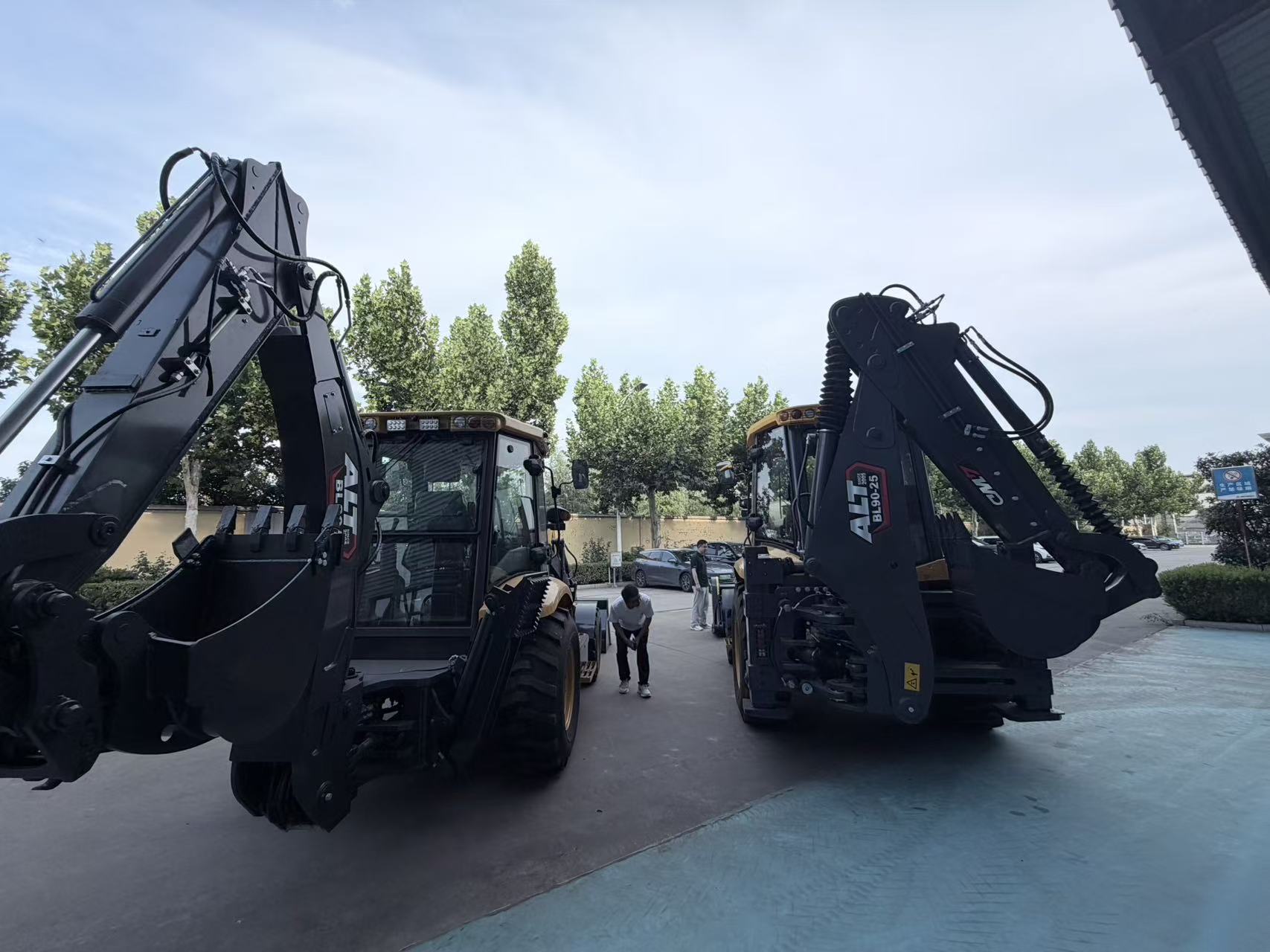
Same yard, same standard. The difference between suppliers is not the paint — it is who picks up the phone six months later.
The Five Things That Actually Separate Suppliers
If price is no longer the main filter, what is? Here are the five dimensions I tell every buyer to evaluate before they choose:
1. Longevity — Will they still exist when you need them?
Backhoe loaders have a working life of 8,000 to 12,000 hours. Your supplier needs to outlast your first major overhaul. Check company registration, export history, and whether they have a physical facility you can verify. A website is not a factory. A factory is a factory.
2. Patience — Do they answer technical questions before the sale?
A supplier who only wants to talk about price and shipping is a supplier who only knows how to sell. The ones worth keeping are the ones who will spend twenty minutes explaining why a wet axle matters for your terrain, or why a 28L/min pump is the wrong choice for a breaker attachment. That patience before payment is the best predictor of patience after.
3. Responsibility — Do they own problems or deflect them?
The worst response in after-sales support is "user error." Sometimes it is user error. But a responsible supplier diagnoses first, blames last. They send photos. They ask for video. They admit when a batch part was substandard and replace it without a fight. Responsibility is a culture, not a policy.
4. Response Speed — How fast do parts and answers move?
A seal kit sitting in a warehouse 8,000 kilometers away is useless if it takes three weeks to ship and another two to clear customs. Ask specific questions: What is your average parts dispatch time? Do you stock common wear items? Can you pre-ship a recommended spare parts package with the machine? Speed is not a promise — it is a system.
5. No Deflection — Do they solve or redirect?
Some suppliers treat after-sales as a routing exercise: "Contact the engine manufacturer directly." "The hydraulic valve warranty is handled by their local dealer." That is not support. That is a handoff. A supplier who takes ownership end-to-end — even if the final fix comes from a sub-supplier — is the supplier you want in your corner.
Payment Is When the Relationship Starts
I say this to every buyer, and I will say it here: the moment you transfer the deposit, the sales phase ends and the service phase begins.
A good supplier knows this. They do not disappear into silence once the container is loaded. They send photos of the loading. They share the bill of lading. They follow up after customs clearance to ask if the machine arrived intact. They proactively send the operator manual in your language and offer a video walkthrough of the first 50 hours of operation.
That behavior is not "extra." It is the baseline of a professional supply relationship. If you are not getting it, you are not saving money — you are just buying risk at a discount.
What I will not do: I will not quote you a price I cannot justify with a component list. I will not promise delivery dates I cannot meet. And I will not tell you a machine is perfect for your job if I have not asked what your job actually is. The buyers who come back for a second machine are the ones who appreciated that honesty the first time.
How to Read a Quote Like a Factory Insider
Before you sign anything, run through this checklist. It will not tell you the "right" price — because that depends on your spec — but it will tell you whether the quote was assembled with care or thrown together to win a race to the bottom.
- Does the quote list the engine brand, model, and emission tier?
- Are axle brand, brake type, and drive configuration specified?
- Is the hydraulic pump flow rate (L/min) and working pressure (MPa) stated?
- Does it include a verified ROPS/FOPS certification reference?
- Are tire size, ply rating, and type (industrial/agricultural/foam-filled) listed?
- Is there a warranty term with clear scope and exclusions?
- Does the supplier offer a recommended spare parts list with photos and part numbers?
- Is there a stated response time for technical support and parts dispatch?
- Are payment terms, Incoterms, and delivery schedule clearly defined?
- Can the supplier provide references from buyers in a region similar to yours?
If a quote misses more than two of these, the low number on the page is not a bargain. It is an incomplete picture.
Need a Quote You Can Actually Evaluate?
Tell me your application, terrain, and required attachments. I will send you a line-item specification with nothing hidden — so you can compare apples to apples, not guesswork to guesswork.
Request a Detailed Quote