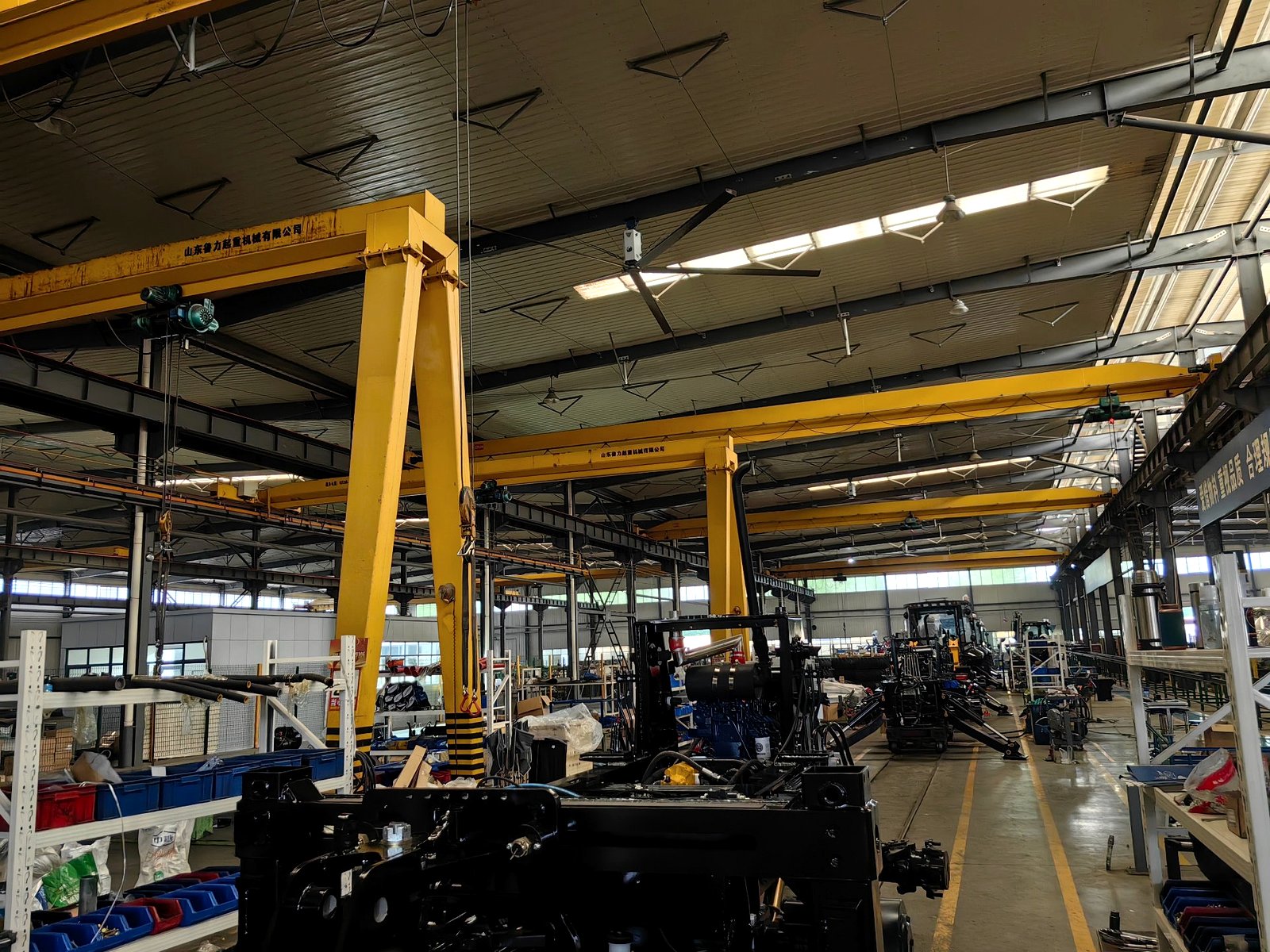
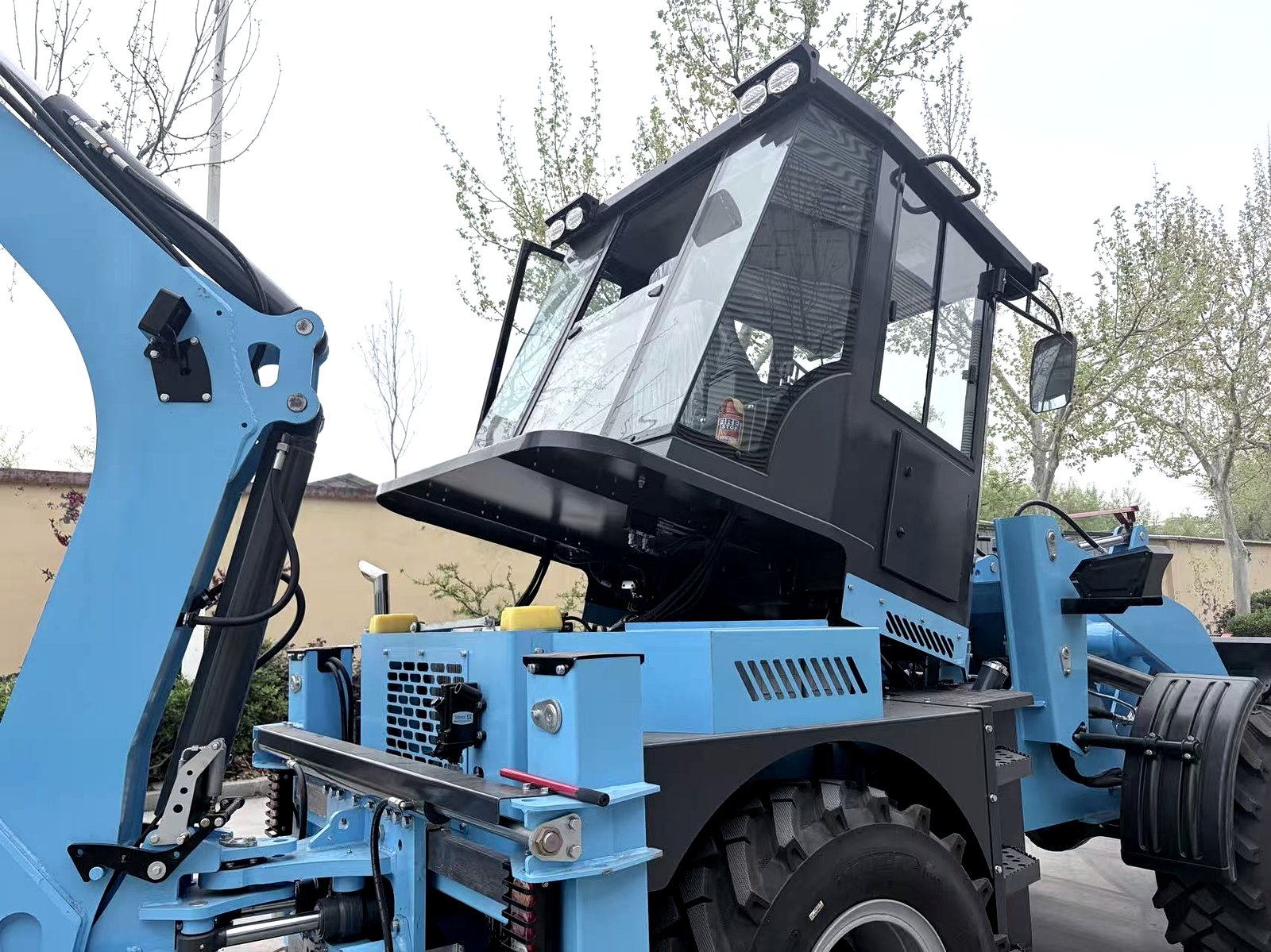
"Backhoe loader or wheel loader?" — it's one of the most common questions I get from contractors setting up a new site. Both machines load material. Both run on wheels. But they're built for completely different jobs, and choosing the wrong one will bottleneck your entire operation.
Let me break down the real differences, based on what I've seen across hundreds of job sites.
The Core Difference
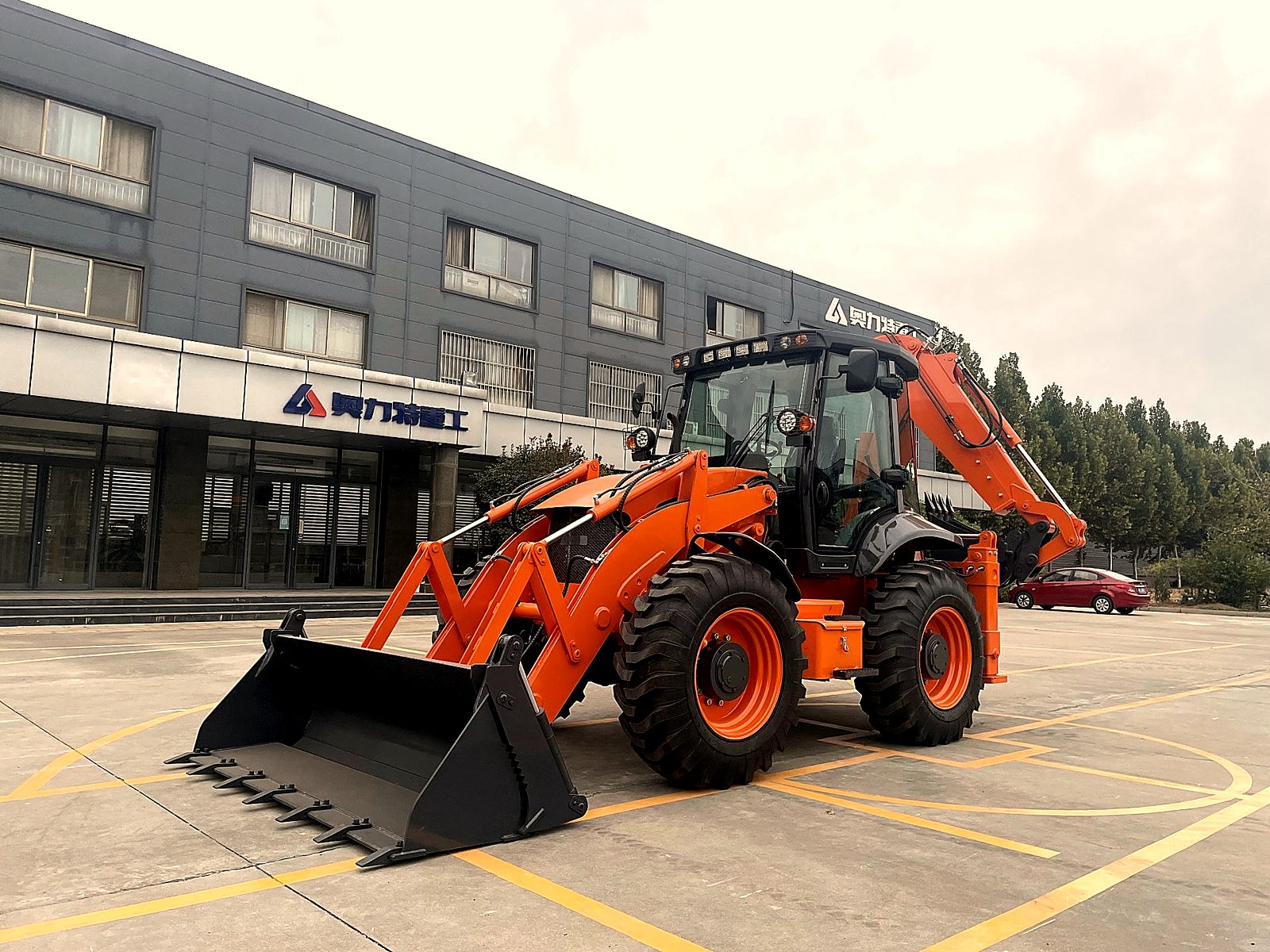
A backhoe loader has two working ends: a loader bucket on the front and an excavator arm on the back. It's designed to do two different jobs — loading and digging — with one machine.
A wheel loader has only a loader bucket on the front. It's designed to do one job — loading — extremely well. No digging arm, no trenching capability.
If you need to dig a trench and load the material into a truck, a backhoe loader does both. A wheel loader needs a separate excavator to do the digging.
Side-by-Side Comparison
| Feature | Backhoe Loader | Wheel Loader |
|---|---|---|
| Bucket capacity | 0.3-1.0 m³ | 1.5-3.0 m³ |
| Digging capability | Yes (rear excavator arm) | No |
| Loading cycle speed | Moderate | Fast (purpose-built for loading) |
| Operating weight | 5-12 tons | 5-30+ tons |
| Road travel speed | 25-40 km/h | 15-35 km/h |
| Best for | Mixed work, utilities, construction, farming | High-volume loading, quarries, ports |
| Price (China) | Lower | Higher (for same weight class) |
When to Choose a Backhoe Loader
A backhoe loader is the right choice when your work involves variety:
- Construction sites with mixed tasks: Dig foundations in the morning, load trucks in the afternoon
- Utility installation: Trench for water/sewer/power lines, backfill, and compact
- Farming and agriculture: Dig ditches, load feed, move earth, handle materials
- Municipal maintenance: Road repair, ditch cleaning, snow removal, small demolition
- Sites with limited space: Backhoe loaders are more compact and maneuverable
The key advantage is versatility. One machine, one operator, one trailer — but it can do the work of two or three specialized machines. For my clients in Africa and Southeast Asia, where budget and transport are tight, this is the deciding factor.
Models like the BL 70-25 and BL 90-25 are ideal for this mixed-work profile.
When to Choose a Wheel Loader
A wheel loader is the right choice when your work involves volume:
- Quarries and aggregate plants: Loading trucks with gravel, sand, or crushed stone all day
- Ports and logistics yards: Moving bulk material at high volume
- Large construction sites: Where one machine loads continuously and a separate excavator digs
- Stockpile management: Building and maintaining material stockpiles
- Scrap and recycling yards: Loading loose material into trucks or processing equipment
The key advantage is loading speed and capacity. A wheel loader's larger bucket means fewer cycles to fill a truck. In an 8-hour shift loading trucks, the time savings is enormous.
Productivity Math
Let's say you need to load a 10-cubic-meter truck:
- Backhoe loader (0.8 m³ bucket): 13 cycles × 45 seconds/cycle = ~10 minutes per truck
- Wheel loader (2.5 m³ bucket): 4 cycles × 35 seconds/cycle = ~2.5 minutes per truck
For one truck, the difference is small. But if you're loading 50 trucks per day:
- Backhoe loader: 500 minutes = 8.3 hours
- Wheel loader: 125 minutes = 2.1 hours
That's why high-volume loading operations always choose wheel loaders. But if you're only loading 5-10 trucks per day and also need to dig trenches, the backhoe loader wins easily.
The tipping point: If more than 70% of your work is loading loose material into trucks, get a wheel loader. If your work is mixed (digging + loading + material handling), get a backhoe loader. If you're not sure, start with a backhoe loader — you can always add a wheel loader later.
Digging Capability: The Dealbreaker
This is where the comparison ends for many buyers:
- A backhoe loader can dig a 3-5 meter trench, break concrete with a hydraulic breaker, and drill holes with an auger — all from the rear arm. See my attachments guide for the full range.
- A wheel loader cannot dig trenches, cannot use a breaker, and cannot drill holes. Its front bucket can skim and load, but it can't excavate.
If your work requires any digging deeper than 50cm, you need a backhoe loader (or a separate excavator alongside your wheel loader).
Maintenance Comparison
Both machines require regular maintenance, but the costs differ:
- Backhoe loader: More components to maintain (two hydraulic systems, more cylinders, stabilizers) but generally lower parts cost due to tractor-based design
- Wheel loader: Fewer systems but heavier components — larger tires, heavier axles, bigger transmission. Parts cost more per unit.
For remote sites where parts availability is limited, the backhoe loader's tractor-based components are easier to source. See my maintenance guide for details.
Transportation
Backhoe loaders are easier and cheaper to transport:
- Lighter weight — smaller trailer required
- Can travel on public roads at 25-40 km/h between nearby sites
- Compact dimensions fit on standard low-bed trailers
Wheel loaders, especially larger models, require heavier trailers and permits for oversize loads. For contractors moving between multiple sites, this is a significant cost factor.
Final Verdict
Choose based on your primary work pattern:
| If your work is... | Choose |
|---|---|
| 70%+ loading loose material | Wheel loader |
| 50%+ digging and trenching | Backhoe loader |
| Mixed (dig + load + handle) | Backhoe loader |
| High-volume truck loading | Wheel loader |
| Utility/municipal work | Backhoe loader |
| Quarry/mining | Wheel loader |
Still not sure? Tell me about your typical jobs and I'll give you a straight recommendation — even if it's not a machine I sell.
Need help choosing between a backhoe loader and a wheel loader?
Tell me your work type and volume. I'll recommend the right machine for your specific situation.
Ask me on WhatsApp